Selected work · 03
KOMPAS.com Play
Two web-based games shipped solo, design-to-code, on a reusable framework for KOMPAS's entertainment channel.
- Role
- Sole Frontend Developer
- Timeline
- 3–4 months
- Status
- Live at play.kompas.com
The Context
KOMPAS's entertainment channel needed in-house games, not just licensed ones.
KOMPAS.com Play is the entertainment channel inside Indonesia's largest news publisher. Its job is straightforward: keep readers on the site longer by giving them something to do between articles. More engagement, more ad inventory.
What KOMPAS.com Play is
The channel launched on third-party games. I joined to start building games in-house, beginning a sequential program where each title ships before the next one starts.
Why in-house games
Third-party games solve the engagement problem but limit the upside. They can't be customized to fit KOMPAS's audience, can't be tied to editorial moments, can't carry the brand. Building in-house meant Play could ship games shaped around Indonesian readers and, eventually, around campaigns and seasonal events with real prizes.

What I Built
Two games, sequential, each around 6–8 weeks of solo build.
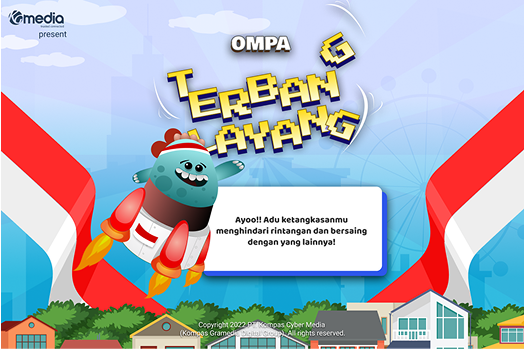
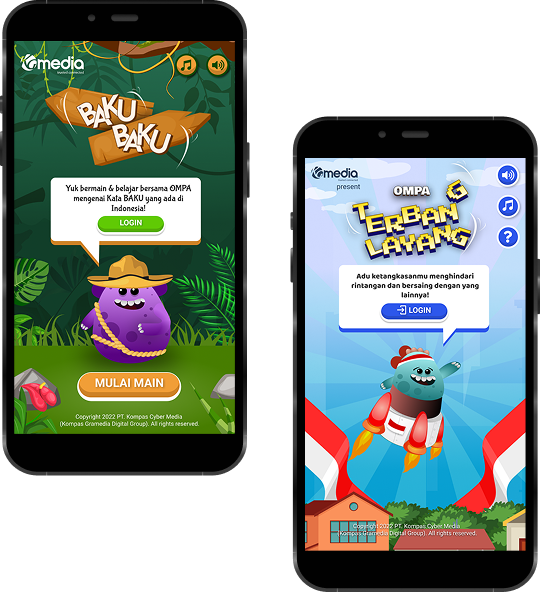
Terbang Layang
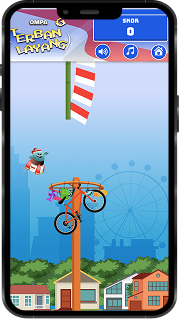
A Flappy Bird-style endless runner. Players tap to keep the character, Ompa, airborne while avoiding obstacles. Built first. The mechanic is simple; the difficulty curve does the work.
Baku Baku
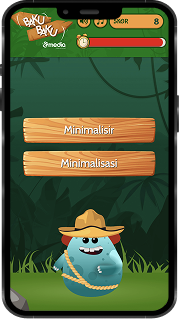
A spelling trivia game built around correct Bahasa Indonesia. Players choose between two words; one is right, one is wrong. Slower and calmer, built for a quick round between articles.
My role
The visual direction was set by the product team before I joined. I owned the mechanics, the feel, the build, and shipping for both games, end-to-end.
How I Built Them
Three engineering decisions that shaped both games.
Most of the technical decisions were made before the first line of game code. These three had the most lasting effect.
Framework choice: Pixi.js vs. Phaser 3
Pixi.js was my first evaluation: fast renderer, but raw. State, input, and scene management were all mine to wire. Phaser 3 uses Pixi as its rendering layer and adds the structure a solo developer needs. The switch saved weeks and kept the codebase maintainable across both games.
Build for two games, not one
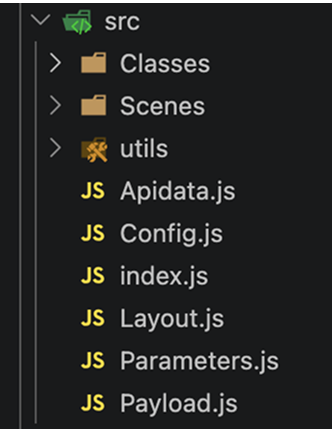
While building Terbang Layang I isolated the framework layer early: preloading, responsive scaling, and game-ratio handling were shared from the start. When Baku Baku came in, the second game was faster to build because the foundation was already done.
Optimize for mobile network reality
Most users are on mobile on mixed-quality Indonesian networks. I kept bundle size minimal, lazy-loaded assets where possible, and used Phaser's preload pattern so players see a loading state instead of a blank screen.
What Shipped
Two games designed, built, and shipped.
Scope
Two games shipped end-to-end: Terbang Layang and Baku Baku. Built solo on Phaser 3, deployed under play.kompas.com, integrated with KOMPAS's existing channel pages. Both still live and playable today.
What I observed
Terbang Layang outperformed Baku Baku. Players returned more often and played longer sessions. The takeaway: in this audience, games that demand attention and reward reflexes beat games that ask for calm thinking. Useful input for whatever Play builds next.
What I'd do differently
The reusable framework was adopted by both games, but the channel paused new development after the second title, so the architecture investment never got a third title to pay off in. What did pay off was the discipline: build the foundation first, keep it separable. And the real lesson: I built Terbang Layang in full before learning what made it fun. Next time, small playable prototypes come before any full build.